
Imagine your smartest Kubernetes expert never sleeps, never takes vacation, and can investigate any alert in seconds flat. That is essentially what HolmesGPT does — it is an AI assistant purpose-built for investigating and resolving incidents in Kubernetes and cloud-native environments. You hand it a problem (a crash, a misconfigured service, a mysterious latency spike), and it digs through logs, metrics, and cluster state to figure out what went wrong and what to do about it.
Think of it like having a tireless SRE detective on call 24/7 — one that reads your Prometheus graphs, parses your Kubernetes events, and cross-references documentation faster than any human could.
Version 0.38.0, released on July 30, 2026, brings three things that matter: a human-approval gate for tool calls, a massive reduction in token consumption, and better reliability under load. Let us get into it.
What Is New in 0.38.0
Remote Tool Call Approval Workflows
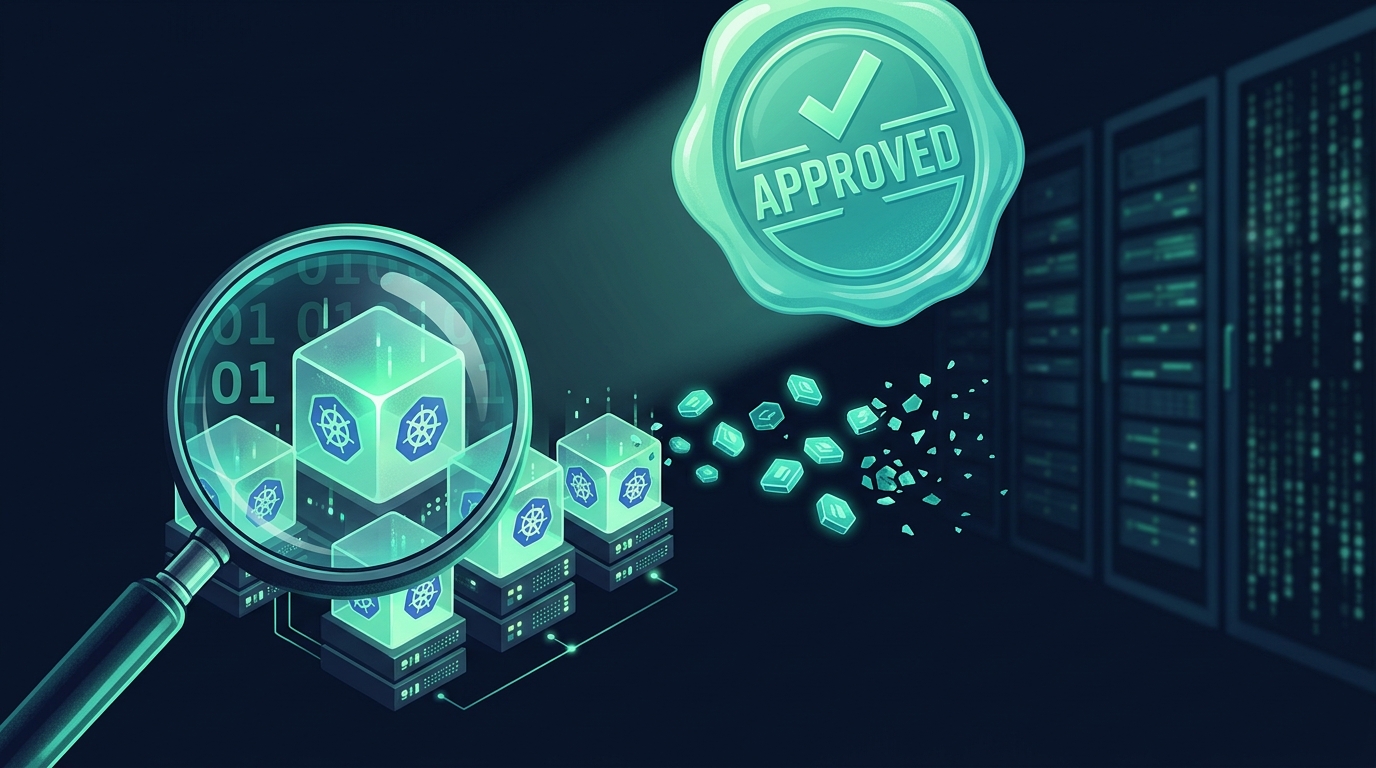
This is the headline feature. HolmesGPT can execute tools and commands to investigate incidents — pulling logs, running kubectl queries, checking dashboards. But in production environments, especially regulated ones, you do not always want an AI firing off commands without someone signing off first.
With remote tool call approval workflows (PR #2311), HolmesGPT now supports a human-in-the-loop model. When the AI wants to execute a tool, the request can be routed to an approval workflow — meaning a real person gets to say yes or no before anything runs. This is a big deal for teams in finance, healthcare, or any organization with strict change-management requirements.
If your compliance team has been nervously side-eyeing AI tools that can run kubectl commands unsupervised, this feature is for them.
The approval workflows are remote, meaning they integrate with your existing tooling rather than forcing you into a proprietary UI. Whether that is a Slack approval, a ticketing system, or a custom webhook, HolmesGPT can route tool call requests through it.
50-60 Percent Fewer Prompt Tokens
LLMs are powerful, but they are also expensive. Every token in a system prompt, every tool description, every instruction adds to your API bill. HolmesGPT 0.38.0 tackles this head-on with a 50-60% reduction in prompt token usage (PR #2301).
The team achieved this by aggressively trimming system prompts and condensing tool descriptions — without losing functionality. The AI still knows how to investigate incidents the same way; it just spends far fewer words doing it.
# Before 0.38.0: large system prompts + verbose tool descriptions
# After 0.38.0: ~50-60% fewer tokens for the same capabilities

# This means:
# - Lower API costs per investigation
# - Faster response times (less text to process)
# - More headroom for conversation history
For teams running HolmesGPT at scale — multiple clusters, dozens of concurrent investigations — this is not a minor optimization. Halving token costs could be the difference between viable and unviable for large deployments.
Conversation-Worker Reliability Improvements
When you have many concurrent conversations happening — multiple engineers asking HolmesGPT to investigate different incidents at the same time — the system needs to handle slot exhaustion gracefully. Previously, when all conversation worker slots were busy, the experience was less than ideal.
Version 0.38.0 makes conversation-worker slot exhaustion visible and bounds reconnect sign-in behavior (PR #2327). Translation: when the system is overloaded, you will know about it instead of staring at a silent timeout. And when reconnects happen, they behave predictably rather than hammering the server.
- Visibility: Slot exhaustion is now surfaced clearly so operators can diagnose capacity issues.
- Bounded reconnects: Reconnect sign-in is rate-limited to prevent thundering-herd behavior under load.
- Production-ready: These are the kinds of improvements that separate a toy from a tool you trust on call.
Additional Changes
- Slack context recovery evals — New evaluation framework for recovering context from Slack channel history (PR #2323). This lays the groundwork for HolmesGPT to pick up conversational context from past Slack discussions, making its incident investigations richer.
- Go 1.26.5 rebuild + kubectl build — Binaries rebuilt with Go 1.26.5 and kubectl is now included in the build (PR #2324). The kubectl inclusion means fewer external dependencies when HolmesGPT needs to interact with your cluster.
Should You Upgrade?
If you are using HolmesGPT in any production capacity, yes. The remote tool call approval workflows alone justify the upgrade for security-conscious teams. Add in the token cost savings and reliability improvements, and this is a release that makes HolmesGPT more trustworthy — which is exactly what an AI incident investigator needs to be.
0.38.0 turns HolmesGPT from a tool you cautiously experiment with into one you can confidently hand the keys to — with a chaperone.