

gRPC, the high-performance RPC framework that powers communication between services at companies like Google, Netflix, and Square, just turned on post-quantum cryptography by default in version v1.83.0. That means every TLS-encrypted gRPC connection now gets protection against future quantum computers without you changing a single line of code.
If that sentence sounds like it belongs in a sci-fi novel, you are not alone. But this is real, it shipped, and it matters more than you might think.
Let’s break down what gRPC actually is, why this release is worth your attention, and what the new features mean for your services.
What Is gRPC, and Why Should You Care?
Imagine your microservices are coworkers in a busy office. They need to talk to each other constantly — asking for data, sending updates, coordinating tasks. gRPC is the telephone system. It lets services call functions on each other across the network as easily as calling a function in their own codebase.
gRPC is like having a direct phone line between your services that speaks in binary instead of English. It is faster, more efficient, and more structured than sending JSON over HTTP.
Developed by Google in 2015 and now a CNCF incubating project, gRPC solves a specific pain point: service-to-service communication at scale. It uses Protocol Buffers (a binary serialization format) and HTTP/2 (which supports multiplexing and streaming) to deliver something traditional REST APIs struggle with — speed, type safety, and bidirectional streaming.
If you have ever waited 200 milliseconds for a JSON payload to travel between two services on the same cluster, you understand the problem gRPC solves.
Version v1.83.0 (codenamed “garden”) shipped on July 22, 2026, and the headline feature is a big one: post-quantum cryptography is now the default for all TLS key exchanges. That is the kind of change that makes security teams throw a party.
What’s New in gRPC v1.83.0
Post-Quantum Cryptography Becomes the Default
Here is the scenario that keeps security researchers up at night: an attacker intercepts your encrypted traffic today, stores it, and waits for a sufficiently powerful quantum computer to exist. Then they decrypt everything. This is called a “harvest now, decrypt later” attack, and it is not theoretical — nation-state adversaries are believed to be doing this right now.
Post-quantum cryptography (PQC) uses mathematical problems that are hard for both classical AND quantum computers to solve. NIST finalized the first PQC standards (ML-KEM, formerly Kyber) in 2024. Since then, the industry has been racing to adopt them.
gRPC v1.83.0 makes PQC the default for TLS key exchange. Not opt-in. Not behind a flag. The default. Every gRPC connection that uses TLS now gets quantum-resistant encryption automatically.
# Your existing gRPC setup needs no changes.
# PQC is enabled by default in v1.83.0 when using TLS.
# The key exchange now uses ML-KEM (post-quantum)
# alongside the classical ECDHE curve negotiation.
For most users, this is a transparent upgrade. The TLS handshake now negotiates a hybrid key exchange that combines classical elliptic curve cryptography with post-quantum ML-KEM. If you have custom TLS configurations or are connecting to older gRPC servers, test thoroughly — but for the vast majority of deployments, the upgrade is seamless.
PR #42560 — Default to Post-Quantum Cryptography in TLS key exchange
Python 3.15 Support Lands
Python keeps evolving, and gRPC is keeping pace. Version v1.83.0 adds support for Python 3.15, which means the Python gRPC library, the grpcio package, and the code generation tools all work with the latest CPython release.
This matters because Python is the dominant language in the machine learning and data science communities — two spaces where gRPC is increasingly used to serve ML models at scale. If you are running TensorFlow Serving or building gRPC-based inference endpoints, Python 3.15 compatibility means you can upgrade your entire stack without being held back by your RPC layer.
The upgrade required bumping the Bazel build system’s rules_python dependency to version 2.0.2, which is a meaningful infrastructure change under the hood.
PR #42637 — Support Python 3.15
Async Python Gets abort_with_status
If you write asynchronous Python services with gRPC, you have probably noticed a gap: the sync API had abort_with_status() but the async ServicerContext ABC did not. That asymmetry is now fixed.
abort_with_status has been added to the aio ServicerContext ABC, bringing the async API to parity with its synchronous counterpart. This means you can now cleanly abort an async RPC with a specific status code from anywhere in your servicer code:
class MyService(MyServiceServicer):
    async def GetData(self, request, context):
        if not request.is_valid:
            await context.abort_with_status(
                grpc.StatusCode.INVALID_ARGUMENT,
                "Request is not valid"
            )
        return MyResponse(data="here you go")
Before this change, async servicer developers had to work around the missing method with hacks or custom error handling. Now it is a first-class citizen.
PR #42733 — Add abort_with_status to the aio ServicerContext ABC
Smarter Interceptor Exception Handling
Interceptors are gRPC’s middleware system — they let you intercept and modify RPC calls before they reach your service logic. But if a custom interceptor raised an exception, the behavior was inconsistent. The async and sync interceptor APIs handled errors differently, and in some cases, interceptor exceptions would propagate in confusing ways.
v1.83.0 fixes this by consistently handling custom Interceptor exceptions in the InterceptedCall APIs. Now, when an interceptor throws, the exception is caught and translated into a proper gRPC error status rather than crashing the call or leaking into your application logic.
PR #42593 — Handle custom Interceptor exceptions in InterceptedCall APIs
Under the Hood: Authz, Build Tooling, and Type Safety
Beyond the headline features, v1.83.0 includes several quality improvements worth knowing about:
- Authz optimization: The authorization engine no longer passes the RBAC policy by value when constructing the engine (PR #42636). This reduces memory copies and improves performance for services with complex authorization rules.
- Pyright type checking: The Python gRPC codebase now uses Pyright in
standardtypeCheckingMode (PR #42739). Better type checking means fewer runtime surprises for users of the Python library. - Symbol visibility: Internal symbols are now hidden from Python’s
cygrpcshared object (PR #42325). This reduces the library’s public API surface and prevents accidental reliance on internal implementation details. - C# tooling modernization: Grpc.Tools migrated to a new .NET version (PR #42661), and a protoc SIGSEGV crash on ARM64 was fixed (PR #42590).
Upgrade Considerations
The protobuf dependency deserves attention. gRPC v1.83.0 raises the Python protobuf lower bound to 7.35.1 (PR #42914). If your project is pinned to protobuf 6.x, this will cause a dependency conflict on upgrade. A separate backport (PR #43001) relaxes this bound to allow protobuf 6.x for compatibility, so check which protobuf version your ecosystem requires before upgrading.
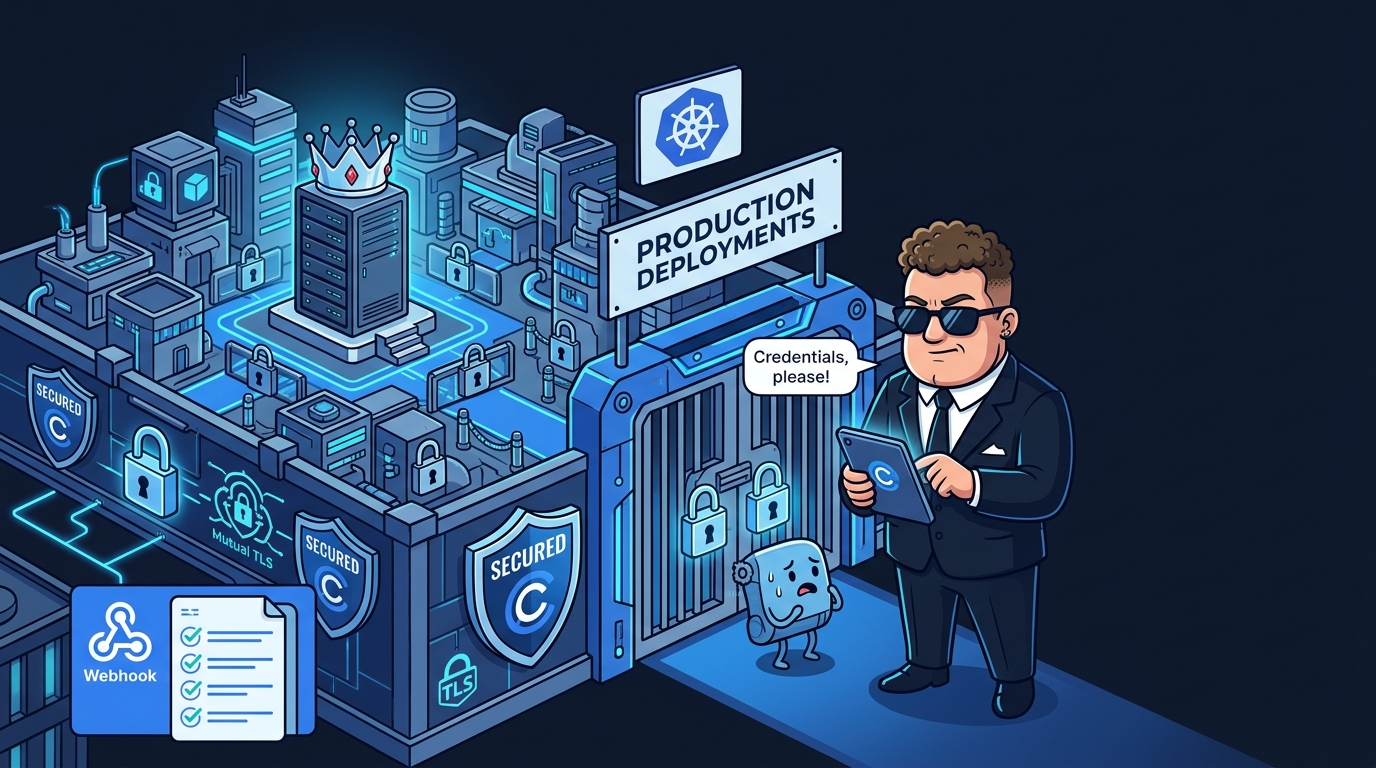
For the PQ cryptography default, most TLS configurations will work without changes. The hybrid key exchange is designed to be backward-compatible — if the peer does not support PQC, the connection falls back to classical ECDHE. However, if you have strict TLS pinning or custom cipher suite requirements, test your connections before rolling to production.