Telepresence just shipped v2.30.1, and if you are tired of the build-push-deploy-wait-repeat loop every time you change one line of code in a Kubernetes service, this little patch deserves your attention.
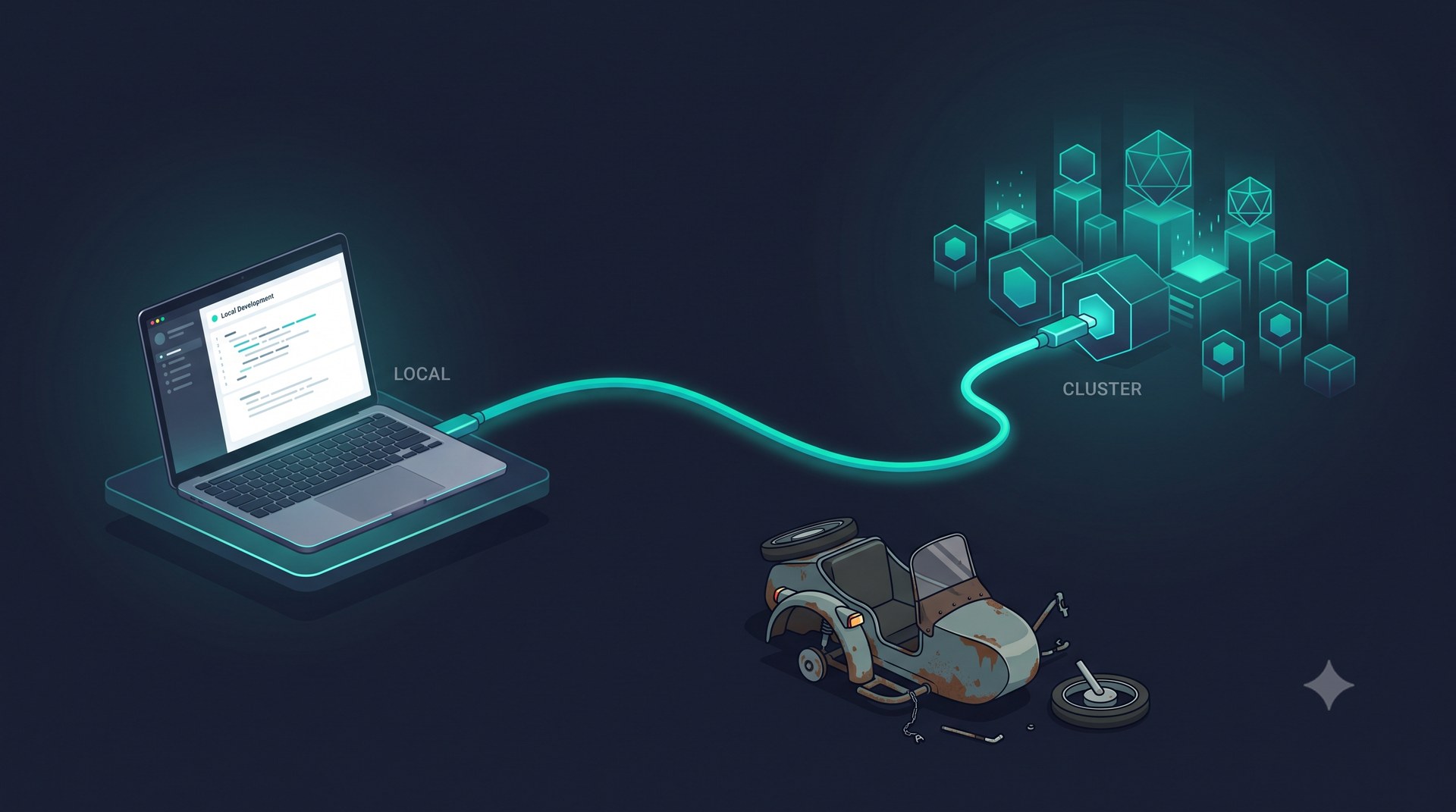
Here is the thirty-second pitch: Telepresence is an open-source CNCF tool that plugs your laptop directly into a Kubernetes cluster. You run your service locally — with your own IDE, your own debugger, your own hot reload — and it receives real traffic from the cluster. No container image to build. No pod to push. No deploy to wait for.
Who uses it? Platform engineers and developers debugging microservices. The kind of people who have stared at a failed deploy for eleven minutes because they added a print statement.
Think of it like an extension cord for your cluster. Your laptop becomes part of the cluster’s network, but your code stays on your machine where you can actually iterate on it.
The reason v2.30.1 specifically matters: three days ago, v2.30.0 shipped a genuinely big feature — the node-hosted traffic-agent, which lets Telepresence attach to your workloads without injecting a sidecar and without restarting your pods. v2.30.1 is the follow-up that makes that new mode the default the moment you turn it on. That is the story.
What’s New in v2.30.1
Node-Agent Is Now the Default When You Enable It
This is the headline. Before v2.30.1, enabling node-agent mode was a two-step dance: you turned on nodeAgent.enabled=true in the traffic-manager Helm chart, and then you separately flipped client.nodeAgent.enabled to make clients actually use it. Forget the second flag and nothing happened. Confusing.
Now, installing the traffic-manager with nodeAgent.enabled=true automatically makes node-agent the default mode for client attachments. One flag, done. Admins who want to keep the sidecar as the default while still allowing node-agent attachments can set client.nodeAgent.enabled=false explicitly — the explicit value always wins.
Why it matters: the node-agent is the more elegant architecture — no sidecar injection, no agent-injector webhook, no pod restarts when you attach. Making it the default removes the friction that was slowing adoption of the v2.30.0 feature. PR #4208.
The Traffic-Manager Now Reports Agent Mode Adoption
Quietly useful for the project, not life-changing for you. The traffic-manager’s anonymous usage report now records whether node-agent mode and the agent-injector are enabled. That data lets the Telepresence maintainers measure how quickly the community is moving from sidecars to node-agents — which informs where they invest engineering effort.
If you are the kind of person who reads release notes for telemetry changes, this one tells you the project is paying attention to whether the node-agent bet is paying off.
Security Fix: Your Forwarded Ports No Longer Leak Onto the LAN
This one is worth upgrading for if you use --to-pod on a shared workstation or a coffee shop network. The local listeners created for --to-pod port forwards were binding to every interface on your machine — meaning anyone on your local network could reach the pod ports you had forwarded. The flag’s documented contract was always localhost:PORT, but the implementation did not match.
v2.30.1 binds those listeners to the loopback interface only, matching the documented behavior. A containerized daemon is unaffected — its listeners stay on all interfaces of the daemon container’s private network namespace, which is what Docker port publishing expects.
# Before v2.30.1: --to-pod 8080:80 bound to 0.0.0.0:8080
# After v2.30.1:  --to-pod 8080:80 binds to 127.0.0.1:8080 only
If you run Telepresence on a laptop on untrusted networks, upgrade. The fix is in the v2.30.1 release.
v2.30.0 gave you a better agent. v2.30.1 makes it the obvious choice — and quietly closes a port-leak you probably did not know you had.
Learn More
- Telepresence Quick Start — get connected to your cluster in minutes
- GitHub Repository — source, issues, and contributions
- Full Release Notes for v2.30.1 — the complete changelog